


CORVETTE GENERATIONS
The C5 Corvette (1997–2004)
Corvette reinvented: 1997 to 2004, and 248,715 cars. Hydroformed frame with the transmission at the back, the all-aluminum LS1, run-flats, convertible with a trunk, hardtop that became the 405hp Z06, the 50th Anniversary and Commemorative Editions, and the C5-R that won Daytona and Le Mans three times. This is the hub for all 8 years.
Quick Nav: Story · Featured · Timeline · Model Years · Specials · Z06 · C5-R · Special Editions · Tuners · Engines · Racing · Buying & Market · Technical · Pics & Videos · All Posts · FAQs
The Basics
Generation: C5 Corvette, the fifth generation; the first Corvette with a rear transaxle and the LS engine
Body Styles: Two-door hatchback coupe with a removable roof panel (1997–2004), two-door convertible with a trunk (1998–2004), fixed-roof hardtop (1999–2000) that became the Z06 body (2001–2004); 124,596 coupes, 89,610 convertibles, 6,121 hardtops, 28,388 Z06s
Production: 248,715 over eight years: 9,752 / 31,084 / 33,270 / 33,682 / 35,627 / 35,767 / 35,469 / 34,064 (1997–2004); 28,388 Z06s, 11,632 50th Anniversary Editions, 6,899 Commemorative Editions, 1,163 1998 Pace Car replicas
Designers: John Cafaro (exterior) under Jerry Palmer and Wayne Cherry, Jon Albert (interior); chief engineer Dave Hill, who succeeded Dave McLellan in 1992; program manager Russ McLean; Corvette Racing run by Pratt & Miller with Doug Fehan
Chassis: Front-engine, rear-wheel drive with a rear-mounted transaxle; hydroformed steel perimeter frame rails with a central backbone and balsa-cored composite floors, 104.5-in wheelbase, 4.5 times stiffer than the C4; aluminum double-wishbone suspension with transverse composite leaf springs, run-flat Goodyear EMTs with no spare, four-wheel discs with ABS and traction control; Active Handling from 1998, Magnetic Selective Ride Control from 2003
Engines: 346 ci (5.7 L) all-aluminum LS1 Gen III small block, 345 hp (1997–2000) and 350 hp (2001–04); Z06: LS6, 385 hp (2001) and 405 hp (2002–04); Callaway C12 SuperNatural 440 hp; C5-R 6.0 and 7.0 L Katech racing engines
Transmissions: Borg-Warner T56 six-speed manual (M12 close-ratio in the Z06) and 4L60-E four-speed automatic, both in the rear transaxle
Original Price: $37,495 coupe in 1997 to $44,535 coupe / $51,535 convertible / $52,385 Z06 in 2004; the Z06 was $47,500 at launch in 2001
Assembly: Bowling Green, Kentucky; LS1 and LS6 from St. Catharines, Ontario; C5-R built by Pratt & Miller in Wixom, Michigan
Predecessor: C4 Corvette (1984–1996)
Successor: C6 Corvette (2005–2013)
The Overview
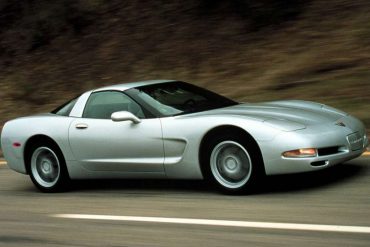
The fifth-generation Corvette was the first Corvette designed from a clean sheet in every system at once, and the one General Motors came closest to never building. Approved, cancelled and revived through GM’s financial crisis of 1991–93, it reached the Detroit show on January 6, 1997 as a 1997 coupe with a hydroformed frame four and a half times stiffer than the C4’s, the transmission moved to the rear axle for a near 50/50 weight split, balsa-cored floors, a trunk-sized hatch, run-flat tires in place of a spare, a 104.5-inch wheelbase and the first Gen III small block, the 345-horsepower all-aluminum LS1. It cost $37,495, $270 more than the 1996 coupe it replaced.
The range filled in fast. The convertible came back in 1998 with a trunk, the first since 1962, and paced the Indianapolis 500; the fixed-roof hardtop of 1999 was the cheapest and stiffest C5 and, in 2001, became the Z06, with the 385-horsepower LS6, a close-ratio six-speed, FE4 suspension and a titanium exhaust for $47,500, then 405 horsepower from 2002. The 50th Anniversary Edition of 2003 brought magnetic dampers to a production car for the first time, and the Commemorative Edition of 2004 marked the C5-R’s three Le Mans class wins with a carbon-fiber hood on the Z06, the first on an American production car. The C5-R itself, built by Pratt & Miller for the Corvette Racing team formed in 1999, won the 24 Hours of Daytona outright in 2001, the GTS class at Le Mans in 2001, 2002 and 2004, and four straight American Le Mans Series championships.
Chevrolet built 248,715 C5s and 28,388 of them were Z06s, which is why the C5 is the entry point to a modern Corvette and the Z06 its appreciating end. In 2026, driven coupes and convertibles sold for $9,000 to $27,500, Pace Car replicas for $18,000 to $41,000, 50th Anniversary cars for $11,550 to $46,200, Z06s for $16,300 to $55,000 with Classic.com’s benchmark around $28,500, and Z06 Commemorative Editions for $23,583 to $40,000. This page is the hub: the story, a year-by-year table, every engine, the Z06, the C5-R, the special editions and the tuner cars, a buying guide with current prices, and links to the eight model-year pages and the research behind them.
The C5 Corvette Story
The C4 had been a good car that never quite outran its reputation, and by 1989 Dave McLellan’s engineers were already sketching its replacement. What nobody planned for was that the fifth-generation Corvette would spend its first four years fighting for its life inside General Motors, and that the car which finally reached dealers in 1997 would be the best-engineered Corvette ever made because of the delay rather than in spite of it.
Surviving uncertainty
The first C5 program was approved in 1988 for a 1993 launch, then slipped to 1994 and 1995 as GM’s money ran out. Between 1990 and 1992 the corporation lost more than ten billion dollars, a boardroom coup replaced chairman Robert Stempel with Jack Smith, and every program that was not a volume car came under review. The Corvette, selling twenty thousand a year, looked expendable, and more than once it was cancelled on paper. Chevrolet general manager Jim Perkins kept it alive: he found the money to build CERV IV, a running C5 test mule disguised as a C4, outside the official budget, and used it to prove that the new architecture worked before the board could kill it. The program was reinstated in 1993 as a 1997 model with a new chief engineer, Dave Hill, who had come from Cadillac to replace the retiring McLellan in November 1992, and a new program manager, Russ McLean.
The engineering: a frame, a transaxle and no spare tire
Hill’s team kept one principle from the C4, that the chassis decides the car, and threw away the rest. The frame rails were hydroformed, each one a single steel tube some fourteen feet long pressed into shape by water pressure, welded to a central backbone tunnel; with the body on, the structure was four and a half times stiffer than the C4’s, and the convertible needed no extra bracing at all. The transmission went to the back, bolted to the differential as a transaxle and connected to the engine by a torque tube, which balanced the car at close to 50/50, freed the footwells and let the cabin grow. The floors were sheets of balsa wood between composite skins, light, stiff and quiet. The suspension was aluminum double wishbones with a transverse composite leaf spring at each end, on a 104.5-inch wheelbase eight inches longer than the C4’s, with the wheels pushed to the corners. There was no spare: Goodyear’s run-flat Extended Mobility Tires with a pressure monitor took its place, and the trunk under the hatch could hold two golf bags.
The engine was as new as the car. The LS1 kept the small block’s pushrods and 4.4-inch bore spacing and nothing else: an aluminum block with six-bolt main caps, aluminum heads with replicated ports, coil-near-plug ignition, a composite intake and 5.7 liters of displacement, 345 horsepower and 350 lb-ft, 45 pounds lighter than the LT1 it replaced and the first of the Gen III engines that went on to power every GM truck and performance car for a decade. Behind it sat a Borg-Warner T56 six-speed or a 4L60-E automatic. John Cafaro’s body, chosen over Tom Peters’ and others in a 1992 studio competition, kept the pop-up headlights and the four round taillights, cut the drag coefficient to 0.29 and, for the first time, was designed with the convertible and a future hardtop in mind.
1997 to 2000: the car arrives
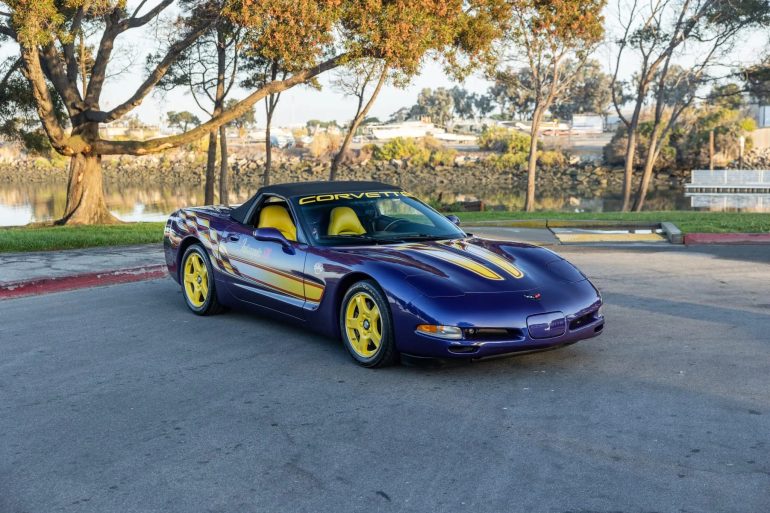
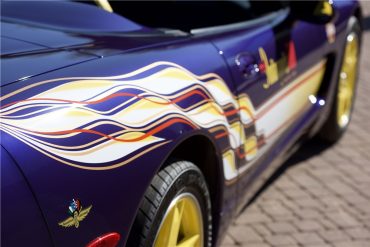
The 1997 was unveiled at the North American International Auto Show in Detroit on January 6, 1997, coupe only, at $37,495, and the press that had written off the Corvette as a boulevard car recanted: the magazines ran it to 60 in under five seconds and past 170 mph and called it the best Corvette ever, and the first-year run of 9,752 was short only because the Bowling Green plant was learning to build it. The 1998 added the convertible, with a trunk for the first time since 1962 and no structural reinforcement, the Active Handling stability system, and the Indianapolis 500 Pace Car in Radar Blue with yellow wheels, 1,163 replicas; sales reached 31,084. The 1999 hardtop was the surprise: a fixed-roof convertible body, twelve percent stiffer and 80 pounds lighter than the coupe, with the six-speed and Z51 standard and a $38,777 price under the coupe’s, meant for club racers and bought by 4,031 of them. The Head-Up Display and a telescoping column arrived the same year. The 2000 was the quiet one: new forged wheels, Millennium Yellow, a key fob in place of the 1997–99 proximity key, and 33,682 cars.
The Z06
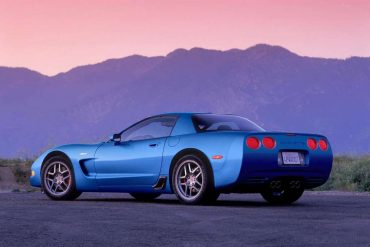
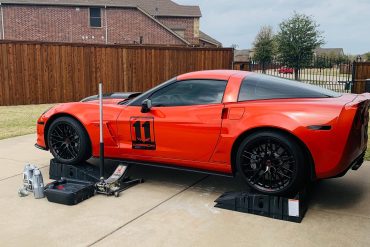
The hardtop existed for 2001: it became the Z06, the first Corvette to carry the 1963 code as a model name. The LS6 was an LS1 with a higher-compression block, better-breathing heads, a hotter cam, a higher-flow intake and a titanium exhaust, 385 horsepower and 385 lb-ft; it drove through a close-ratio M12 six-speed to a 3.42 axle, on FE4 suspension with stiffer springs and bigger bars, 17 x 9.5 and 18 x 10.5-inch wheels and Goodyear Eagle F1 Supercar tires, in a body with functional brake-cooling ducts and a mesh grille that weighed 3,118 pounds, less than any other C5. It cost $47,500 and sold 5,773. For 2002 the LS6 got a higher-lift cam, hollow-stem valves and freer breathing for 405 horsepower and 400 lb-ft, 0–60 in 3.9 seconds and a 171-mph top speed, at $50,150; 8,297 were sold, then 8,635 in 2003 and 5,683 in 2004. The base car was not left behind: the LS1 went to 350 horsepower in 2001, and Active Handling became standard.
2003 to 2004: fifty years and a send-off
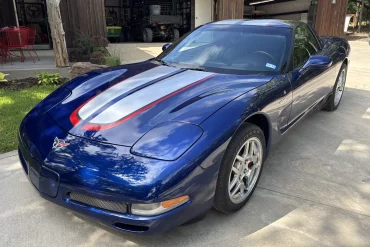
Chevrolet marked the Corvette’s fiftieth year with the 50th Anniversary Edition, 11,632 cars in Anniversary Red over Shale with champagne wheels and embroidered seats, and with the first production application of Magnetic Selective Ride Control, dampers filled with iron-particle fluid that stiffened in a magnetic field a thousand times a second; F55 magnetic ride was optional on any 2003 coupe or convertible. The 2004 was the last C5, and its Commemorative Edition celebrated the C5-R: Le Mans Blue with Shale leather on the coupe and convertible, and on the 2,025 Z06s silver-and-red stripes and a carbon-fiber hood, the first painted carbon-fiber panel on an American production car, over a Z06 whose damping had been retuned on the Nürburgring. The last of 248,715 C5s was built at Bowling Green in the summer of 2004, and the C6, a development of the same architecture, followed for 2005.
Corvette Racing
The C5 was also the car that took Chevrolet back to Le Mans. Corvette Racing, formed in 1999 with Pratt & Miller building and running the cars and Doug Fehan managing the program, debuted the C5-R at the Rolex 24 at Daytona in January 1999 with a 6.0-liter Katech engine, moved to 7.0 liters that season, and won its first race at Texas Motor Speedway in September 2000. In 2001 the team won the 24 Hours of Daytona outright, with Dale Earnhardt and Dale Jr. in the sister car, finished first and second in GTS at Le Mans, and took the first of four straight American Le Mans Series GTS championships; the C5-R won Le Mans again in 2002 and 2004 and Sebring in 2002, and retired after the 2004 season with the C6.R ready. Eleven chassis were built. Every Corvette race car since has descended from it.
What the C5 left behind
The C5 is the Corvette that modern Corvettes are built on. The hydroformed frame, the rear transaxle, the composite springs and the LS engine carried straight into the C6 and C7, the Z06 name became the Corvette’s performance line, Magnetic Ride became an industry product, and Corvette Racing became the most successful factory GT program in American racing. For buyers it is the cheapest way into a Corvette that will keep up with modern traffic, and in the Z06, the Pace Car and the Commemorative Edition, the first modern Corvettes to appreciate. The year pages linked below carry the full specifications, options, colors, VIN ranges and production figures for each of the eight years.
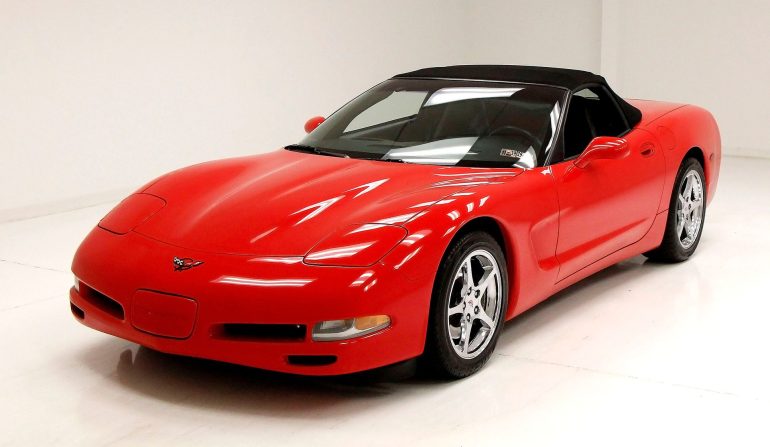
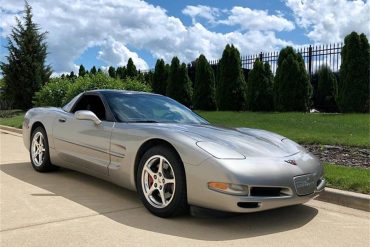
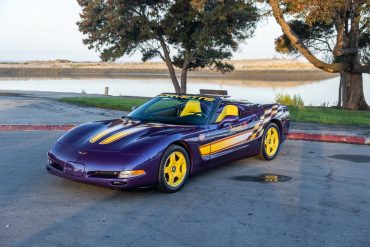
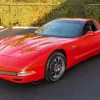
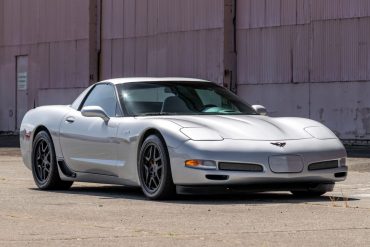
 1997 Chevrolet Corvette
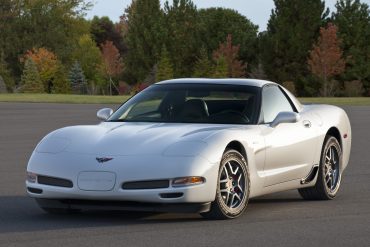
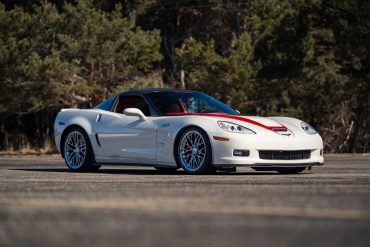
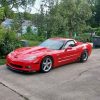
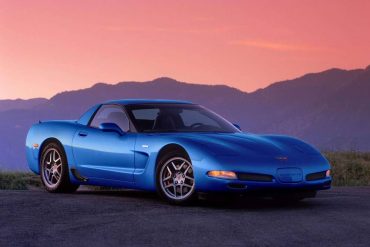
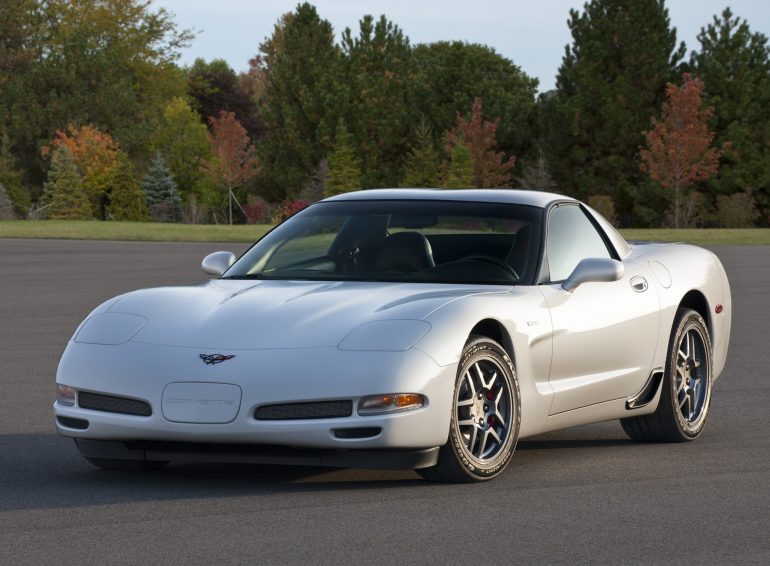 2002 Chevrolet Corvette Z06
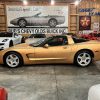
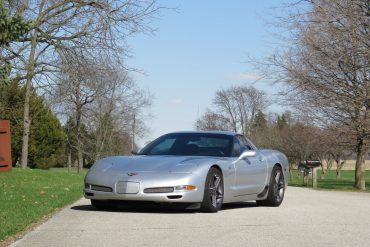
 2003 Chevrolet Corvette 50th Anniversary | Photo Credit: Bring a Trailer
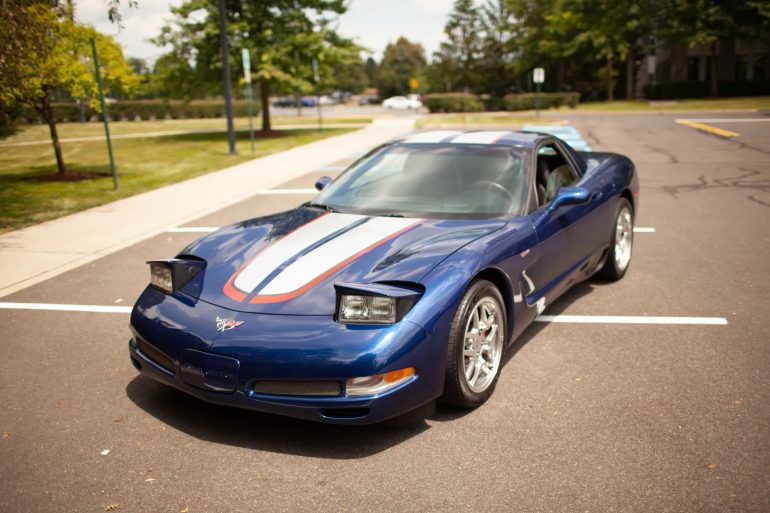
The 2004 Corvette was one of the last two production cars in the world with pop-up headlights; the other was the Lotus Esprit, which also ended that year. Every Corvette from 1963 to 2004 had hidden lamps, and pedestrian-protection rules in Europe made them impossible to carry into the C6. The C5 is also the only Corvette whose test mule, CERV IV, was paid for off the books to keep the program alive.
DID YOU KNOW
Featured C5 Corvette Stories
Longer reads from the archive on the cars that made the generation. Most of these are members-only: an ad-free read and the full archive for the price of a tank of fuel. BECOME A MEMBER

The C5 Corvette Year by Year - The Model Timeline
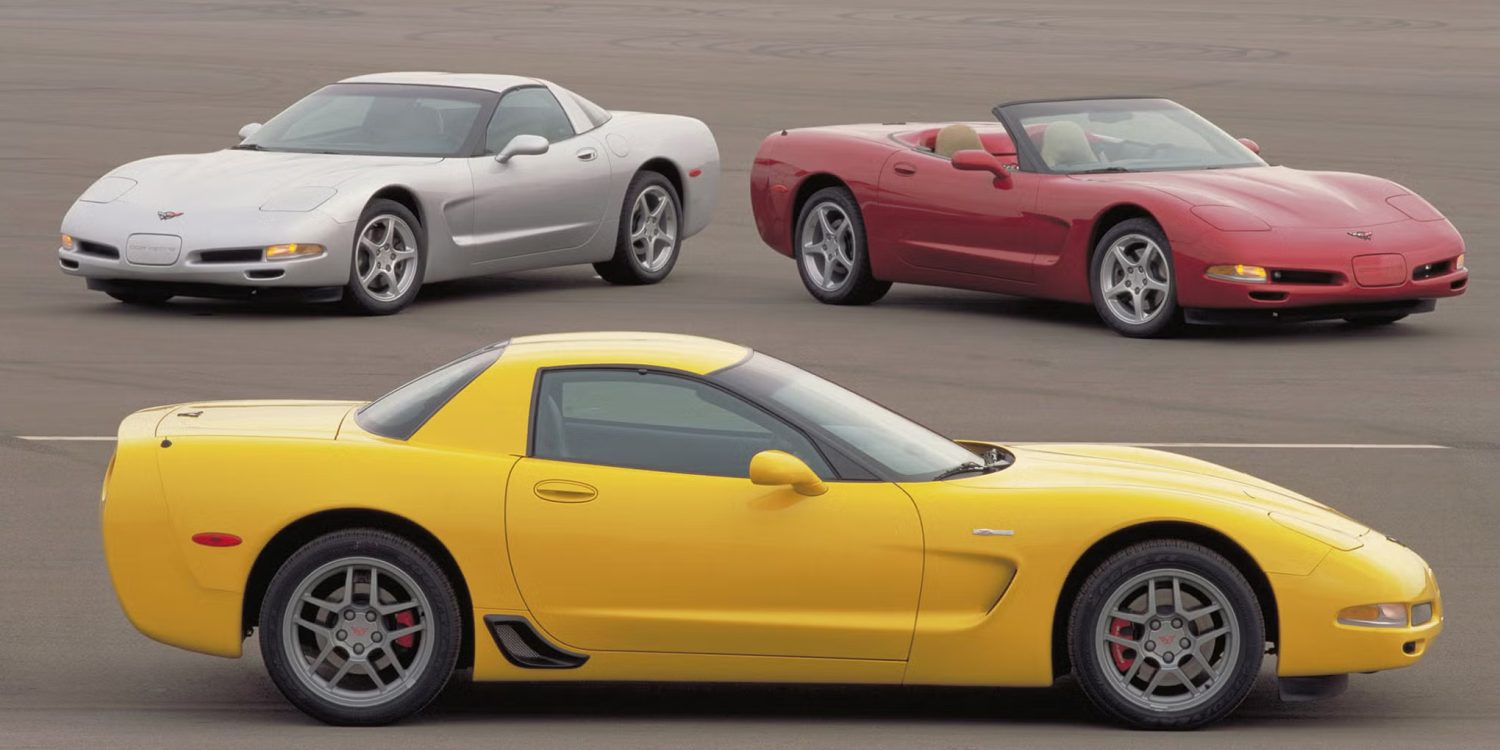
Eight model years and two engines. The LS1 cars of 1997–2000 cover the coupe, the convertible’s return, the Pace Car and the hardtop; from 2001 the hardtop is the Z06 with the LS6, 385 and then 405 horsepower, and the base car has 350. The quick tells are the roof (coupe, convertible, or the fixed-roof hardtop and Z06), the Z06’s mesh grille and brake ducts, the key (proximity fob 1997–99, remote key from 2000), the wheels (five-spoke to 1999, thin-spoke forged from 2000, Z06 and 50th Anniversary designs) and the special-edition colors: Radar Blue and yellow for the 1998 Pace Car, Anniversary Red for 2003, Le Mans Blue for 2004.
Production climbed from 9,752 to a steady 33,000–36,000 a year, the best run since the early 1980s. The collectible cars are the Z06s, the 1,163 Pace Cars, the 11,632 50th Anniversary cars and the 6,899 Commemorative Editions, especially the 2,025 Z06s; the 1998–2000 coupes and convertibles are the least expensive way into a modern Corvette.
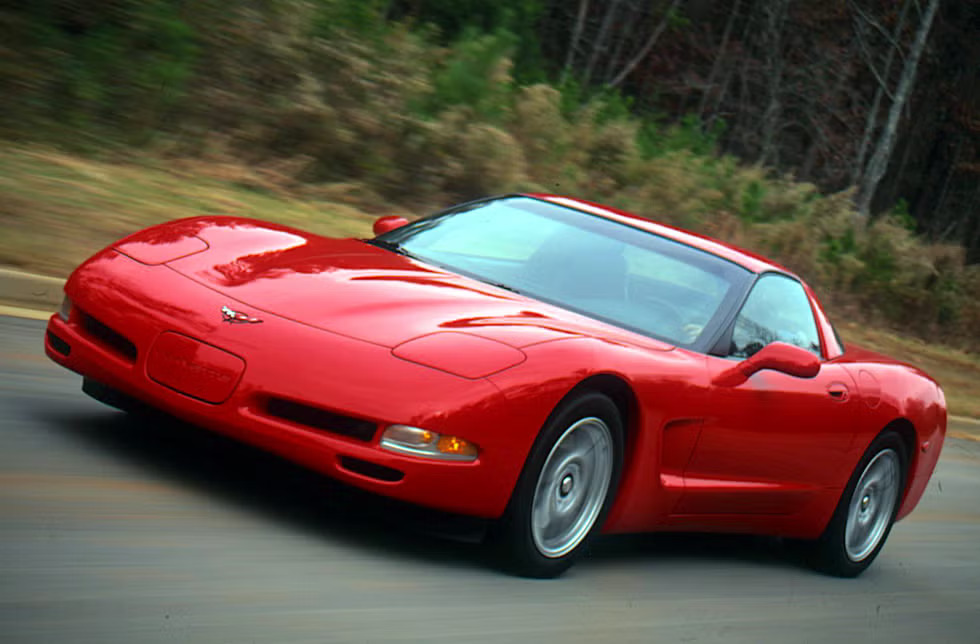
1997 Corvette
The all-new C5 arrived as a coupe only, unveiled at the Detroit show on January 6, 1997 at $37,495: hydroformed frame rails, a rear transaxle, balsa-cored floors, the 345-horsepower all-aluminum LS1, a six-speed or four-speed automatic, run-flat tires with no spare and a hatch that held two sets of golf clubs. Because Bowling Green was retooling and the car was launched mid-year, only 9,752 were built; the 1997 is the rarest C5 and has a few one-year details, among them the lack of a convertible, the early proximity key and the first-year interior trim.
1998–2000 Corvette
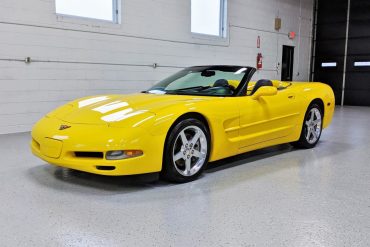
The convertible returned for 1998 with a trunk, the first since 1962, and paced the Indianapolis 500 in Radar Blue with yellow wheels and interior accents; 1,163 replicas were sold, and Active Handling arrived as an option. Production jumped to 31,084. 1999 brought the hardtop, a fixed-roof body with the six-speed and Z51 suspension standard and a lower price than the coupe, bought by 4,031 enthusiasts, plus the Head-Up Display, a telescoping steering column and Twilight Sentinel; 33,270 were built.
2000 was the quiet year: new forged thin-spoke wheels, Millennium Yellow and Dark Bowling Green, Torch Red leather, a conventional key fob in place of the proximity system, and 33,682 cars, 2,090 of them hardtops in the body’s last year under that name.
2001–2002 Corvette
The Z06 arrived for 2001 on the hardtop body with the 385-horsepower LS6, a close-ratio six-speed, FE4 suspension, wider wheels and a titanium exhaust, at $47,500; 5,773 were sold. The base LS1 went to 350 horsepower, Active Handling became standard and the automatic gained a second-generation controller. Production reached 35,627.
For 2002 the LS6 got its 405 horsepower with a higher-lift cam, hollow-stem valves and a freer intake and exhaust, and the Z06 ran 0–60 in 3.9 seconds for $50,150; 8,297 were sold among 35,767 cars. Electron Blue replaced Navy Blue, and the Corvette paced Indianapolis again, this time without a replica.
2003–2004 Corvette
The 50th Anniversary year: 11,632 Anniversary Red cars with Shale interiors, champagne-painted wheels and Magnetic Selective Ride Control, the first magnetic dampers on a production car, at $5,000 on a coupe or convertible; the F55 magnetic ride was optional on any coupe or convertible, and fog lamps, sport seats and dual-zone air became standard. 35,469 were built, 8,635 of them Z06s.
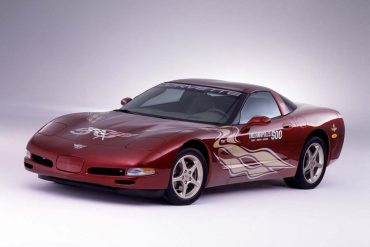
2004 closed the generation with the Commemorative Edition, 6,899 cars in Le Mans Blue with Shale leather, and on the 2,025 Z06s silver-and-red stripes and a carbon-fiber hood, the first on an American production car, to mark the C5-R’s Le Mans wins. The Z06’s dampers were retuned on the Nürburgring and the Corvette paced Indianapolis a third time; 34,064 were built, and the last C5 left Bowling Green in the summer of 2004.
MORE: PRODUCTION FIGURES / BUILD DATES
| YEAR | BUILT | BASE PRICE | ENGINES | WHAT CHANGED |
|---|---|---|---|---|
| 1997 | 9,752 | $37,495 | 5.7 L LS1, 345 hp | All-new car: hydroformed frame, rear transaxle, balsa floors, LS1, run-flats, 104.5-in wheelbase; coupe only, unveiled Jan 6, 1997; 9,752 built, the rarest C5 |
| 1998 | 31,084 | $37,495 / $44,425 convertible | 5.7 L LS1, 345 hp | Convertible returns with a trunk; Indy 500 Pace Car (1,163 replicas, Radar Blue / yellow); Active Handling optional; magnesium wheels; 31,084 built |
| 1999 | 33,270 | $39,171 / $45,579; $38,777 hardtop | 5.7 L LS1, 345 hp | Fixed-roof hardtop (4,031), six-speed and Z51 standard, cheapest and stiffest C5; Head-Up Display, telescoping column, power telescoping; 33,270 built |
| 2000 | 33,682 | $39,475 / $45,900; $38,900 hardtop | 5.7 L LS1, 345 hp | Forged thin-spoke wheels, Millennium Yellow, Torch Red leather, remote key fob replaces the proximity key, bigger Z51 bars; last hardtop (2,090) |
| 2001 | 35,627 | $40,475 / $47,000; Z06 $47,500 | 5.7 L LS1, 350 hp; Z06 LS6, 385 hp (5,773) | Z06 on the hardtop body: LS6 385 hp, M12 six-speed, FE4, titanium exhaust, $47,500, 5,773; LS1 to 350 hp; Active Handling standard; C5-R wins Daytona and Le Mans |
| 2002 | 35,767 | $41,450 / $47,975; Z06 $50,150 | 5.7 L LS1, 350 hp; Z06 LS6, 405 hp (8,297) | Z06 to 405 hp, 3.9 s to 60, $50,150, 8,297; Electron Blue; Indy 500 pace car (no replica); C5-R wins Le Mans and Sebring |
| 2003 | 35,469 | $43,895 / $50,370; Z06 $51,155 (50th +$5,000) | 5.7 L LS1, 350 hp; Z06 LS6, 405 hp (8,635) | 50th Anniversary Edition (11,632, Anniversary Red) with Magnetic Selective Ride Control, the first production magnetic dampers; F55 optional; fog lamps and sport seats standard |
| 2004 | 34,064 | $44,535 / $51,535; Z06 $52,385 (Commemorative +$3,700 / $4,335) | 5.7 L LS1, 350 hp; Z06 LS6, 405 hp (5,683) | Commemorative Edition (6,899, Le Mans Blue; 2,025 Z06s with the carbon-fiber hood); Z06 damping retuned on the Nürburgring; third Indy pace car; last C5; C5-R’s third Le Mans win |
C5 Corvette Model Year Research Hubs (1997–2004)
One page per model year with everything we have on it: the story, specifications, every option and its price, the color chart, VIN ranges, production numbers, pictures, videos, cars for sale and the questions people ask. Start with the year you own or want.





C5 Corvette Special Models, Race Cars & Concepts
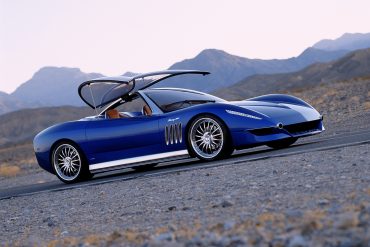
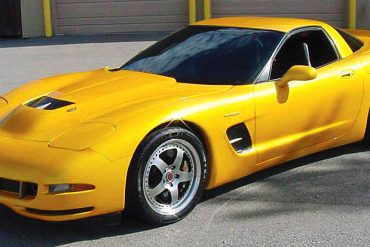
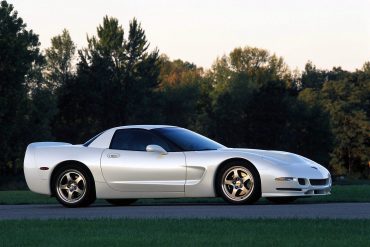
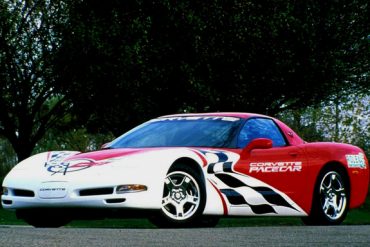
The rare ones and the never-weres: the 1998 Indy Pace Car, the 1999 Daytona and Le Mans pace cars, the 2002 and 2004 Indy pace cars, the 50th Anniversary and Commemorative Editions, the Callaway C12, the Lingenfelter, Mallett, Guldstrand and Specter cars, the Greenwood G5R, the C5-R, and the Tiger Shark, White Shark and Italdesign Moray concepts. The Z06, the C5-R, the special editions and the tuner cars have their own sections below.





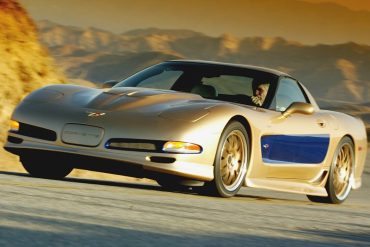
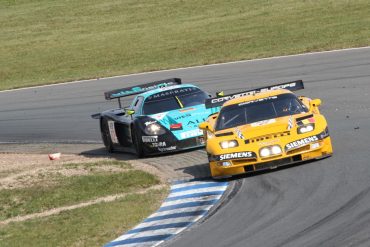
The 2001–2004 Corvette Z06
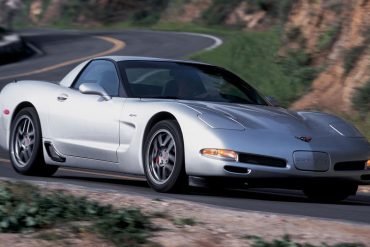
The first modern Z06: the fixed-roof hardtop body, the lightest C5 at 3,118 pounds, with the LS6, a close-ratio M12 six-speed, FE4 suspension, 17 x 9.5 and 18 x 10.5-inch wheels on Eagle F1 Supercars, a titanium exhaust and functional brake ducts. 385 horsepower and $47,500 in 2001; 405 horsepower, 3.9 seconds to 60 and 171 mph from 2002, at $50,150 to $52,385. Chevrolet built 28,388: 5,773, 8,297, 8,635 and 5,683, the last 2,025 as Commemorative Editions with the carbon-fiber hood. In 2026 driven Z06s sold for $16,300 to $36,500, the best delivery-mileage cars for $41,500 to $55,000, and Classic.com’s benchmark sat around $28,500; the 2004 Commemorative Z06 benchmark was about $34,800.
MORE: THE Z06 GUIDE / IS THE C5 Z06 TAKING OFF? / ALL Z06 POSTS


The Corvette C5-R & Corvette Racing
Chevrolet’s first factory Corvette race car since the Grand Sports of 1963. Built and run by Pratt & Miller for the Corvette Racing team formed in 1999, with Katech 6.0- and then 7.0-liter engines, the C5-R debuted at Daytona in January 1999, won first at Texas Motor Speedway in September 2000, and in 2001 won the 24 Hours of Daytona outright (with Dale Earnhardt and Dale Jr. driving the sister car to fourth) and finished first and second in GTS at Le Mans. It won Le Mans again in 2002 and 2004, Sebring in 2002, and four straight American Le Mans Series GTS championships, 2001–2004. Eleven chassis were built; one is in the National Corvette Museum, and the 2004 Commemorative Edition was built to mark the Le Mans wins.
MORE: THE C5-R GUIDE / THE LE MANS WINS / ALL C5-R POSTS


The 1998 Pace Car, 50th Anniversary & Commemorative Editions
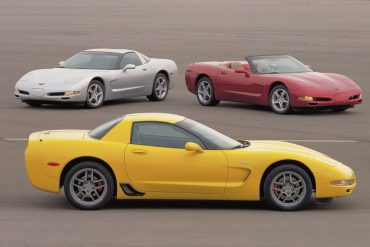
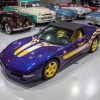
Three factory editions. The 1998 Indy 500 Pace Car replica: 1,163 convertibles in Radar Blue with yellow wheels, a yellow-and-black interior and the Active Handling and magnesium-wheel options, driven at Indianapolis by Parnelli Jones. The 2003 50th Anniversary Edition: 11,632 coupes and convertibles in Anniversary Red over Shale with champagne wheels, embroidered seats and Magnetic Selective Ride Control for $5,000. The 2004 Commemorative Edition: 6,899 cars in Le Mans Blue with Shale leather and Le Mans badging, 2,215 coupes, 2,659 convertibles and 2,025 Z06s with silver-and-red stripes and the carbon-fiber hood. In 2026 Pace Cars sold for $18,000 to $41,000, 50th Anniversary cars for $11,550 to $46,200 and Commemorative Z06s for $23,583 to $40,000.
MORE: THE 1998 PACE CAR / THE 50TH ANNIVERSARY / THE COMMEMORATIVE EDITION / ALL 50TH ANNIVERSARY POSTS
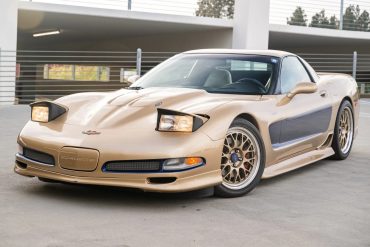



The C5 Tuner Cars: Callaway C12, Lingenfelter, Mallett, Guldstrand & Specter
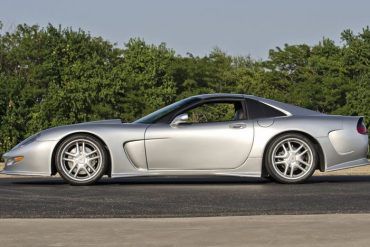
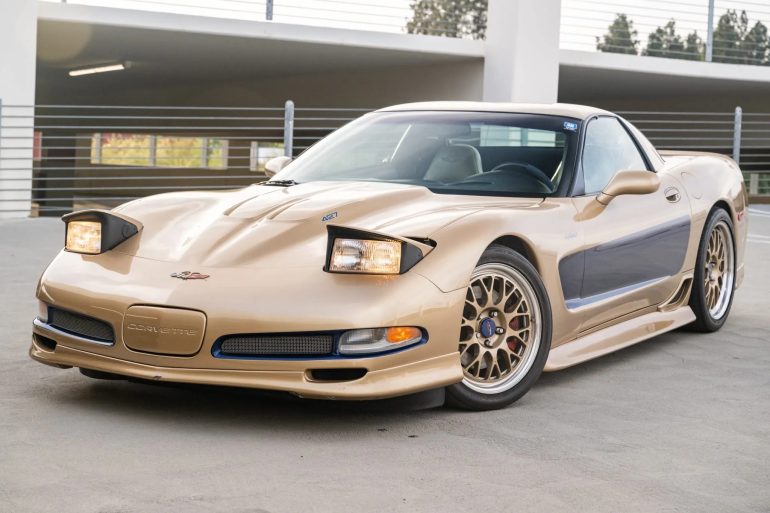
The C5 was the tuners’ Corvette. Callaway rebodied it as the C12, a $180,000 carbon-and-composite coupe or convertible with a 440-horsepower SuperNatural LS1 and a Le Mans entry in 2001; Lingenfelter’s 427 stroker and twin-turbo packages took the LS1 past 500 and then 700 horsepower; Mallett’s Hammer Z06 was the lightest, fastest C5 of its day and one went into the museum sinkhole in 2014; Dick Guldstrand built the 50th Anniversary Signature cars; and Specter Werkes’ GTR was the widebody. Greenwood’s G5R and the Specter and Mallett cars sit in the Specials grid above.
MORE: THE CALLAWAY C12 / MALLETT PERFORMANCE / ALL LINGENFELTER POSTS


C5 Corvette Engines
Two engines, both new. The LS1 was the first Gen III small block: an all-aluminum 5.7-liter V-8 with six-bolt mains, a deep-skirt block, replicated-port aluminum heads, coil-near-plug ignition, a composite intake and a drive-by-wire throttle from 1997, rated at 345 horsepower and 350 lb-ft, 45 pounds lighter than the LT1 it replaced. It picked up 853 heads in 1999, a California LEV calibration and platinum plugs in 2000, and a new intake, cam and 350 horsepower in 2001, with 360 lb-ft (375 with the automatic’s calibration) through 2004. Every C5 coupe, convertible and hardtop has one.
The LS6 was the Z06’s engine: the LS1’s architecture with a stronger block casting, higher compression, better heads, a bigger cam, a higher-flow intake and a titanium exhaust, 385 horsepower and 385 lb-ft in 2001, then 405 horsepower and 400 lb-ft from 2002 with a higher-lift cam, hollow-stem valves and freer breathing. Outside the factory, Callaway’s SuperNatural took the LS1 to 440 horsepower in the C12, Lingenfelter stroked it to 427 cubic inches and turbocharged it, and Katech built the 6.0- and 7.0-liter C5-R racing engines.
The LS engines are the most reliable the Corvette has had and the easiest to verify: the VIN’s eighth character is G for an LS1 and S for an LS6, and the engine code is on the block pad behind the passenger-side head. The engine guides linked in the table cover each one in detail.
MORE: EVERY C5 ENGINE
| RPO | ENGINE | OUTPUT | YEARS | MORE |
|---|---|---|---|---|
| LS1 | 5.7 L (346 ci) all-aluminum Gen III small block, pushrod 16-valve, composite intake, coil-near-plug; 853 heads from 1999, revised intake and cam for 2001 | 345 hp / 350 lb-ft (1997–2000); 350 hp / 360–375 lb-ft (2001–04) | 1997–2004 | Guide |
| LS6 | Z06 engine: LS1 architecture with higher compression, improved heads, bigger cam, high-flow intake and titanium exhaust; higher-lift cam and hollow-stem valves from 2002 | 385 hp / 385 lb-ft (2001); 405 hp / 400 lb-ft (2002–04) | 2001–04 | Guide |
| C12 | Callaway SuperNatural LS1 in the C12 coupe and convertible, 5.7 L with ported heads and Callaway intake; about 20 cars | 440 hp | 1997–2001 | Guide |
| C5-R | Katech racing engines for Corvette Racing: 6.0 L at the 1999 debut, 7.0 L (427 ci) from mid-1999, restricted to ACO/ALMS GTS rules | About 600 hp | 1999–2004 | Guide |
The C5 Corvette in Competition
The C5 brought Chevrolet back to racing with its own name on the car for the first time since the Grand Sports. Corvette Racing was formed in 1999 with Pratt & Miller of Wixom, Michigan building and running the C5-R and Doug Fehan managing the program; the car debuted at the Rolex 24 at Daytona in January 1999 with a 6.0-liter Katech engine, went to 7.0 liters that season, and spent two years learning before its first win, at Texas Motor Speedway in September 2000. 2001 was the breakthrough: the C5-R won the 24 Hours of Daytona outright, with the sister car of Dale Earnhardt, Dale Earnhardt Jr., Andy Pilgrim and Kelly Collins fourth overall, finished first and second in GTS at Le Mans, and took the American Le Mans Series GTS championship.
The C5-R won Le Mans again in 2002 and 2004, Sebring in 2002, and the ALMS GTS title every year from 2001 to 2004, losing Le Mans only in 2003 to the Prodrive Ferrari 550. Eleven chassis were built, ten for Corvette Racing and one for a privateer, and privateers raced them for years after the C6.R took over in 2005. Chevrolet marked the record with the 2004 Commemorative Edition, and the museum across the road keeps a C5-R on display.
The production C5 paced Indianapolis three times, in 1998 (Parnelli Jones), 2002 and 2004 (Morgan Freeman), and the Rolex 24 and Le Mans in 1999, and the Z06 became the club racer’s Corvette in SCCA T1 and NASA. Callaway took the C12-R to Le Mans in 2001, and the Z06 ran in Speed World Challenge GT.
MORE: THE C5-R / THE LE MANS WINS / THE EARNHARDT C5-R / CORVETTE’S RACING LEGACY
| YEAR | CAR | EVENT | RESULT |
|---|---|---|---|
| 1999 | Corvette C5-R (Pratt & Miller, Katech 6.0 then 7.0 L) | Rolex 24 at Daytona | Debut, two cars; 3rd in GT2 class |
| 2000 | Corvette C5-R | ALMS, Texas Motor Speedway | First win, September 2000; 3rd and 4th in GTS at Le Mans |
| 2001 | Corvette C5-R, Fellows / Kneifel / Freon / O’Connell | 24 Hours of Daytona | Overall win; the Earnhardt / Earnhardt Jr. car 4th |
| 2001 | Corvette C5-R | 24 Hours of Le Mans, GTS | 1st and 2nd in class; first ALMS GTS championship |
| 2002 | Corvette C5-R | Le Mans and Sebring, GTS | Class wins at both; second ALMS title |
| 2003 | Corvette C5-R | ALMS GTS / Le Mans | Third ALMS title; 2nd in class at Le Mans behind the Prodrive Ferrari 550 |
| 2004 | Corvette C5-R | 24 Hours of Le Mans, GTS | Third Le Mans class win; fourth ALMS title; the C5-R retires |
| 1998 / 2002 / 2004 | Corvette convertibles and Z06 | Indianapolis 500 | Pace cars; 1,163 replicas in 1998 only |
Buying a C5 Corvette
What They Bring & What To Check
The C5 is the most affordable modern Corvette and the market sorts it by body and edition first: the Z06, then the Commemorative and 50th Anniversary editions and the 1998 Pace Car, then the hardtops of 1999–2000, then coupes and convertibles by mileage. The six-speed adds to everything, the automatic subtracts, and on a Z06 the 405-horsepower 2002–04 cars bring more than the 385-horsepower 2001. Low mileage counts for more than the year: a 5,000-mile car of any kind brings two to three times a 60,000-mile one, and the C5 Z06 has been the first modern Corvette to appreciate, which the market has noticed.
Results tracked by Classic.com between late 2025 and October 2026 show the spread. Standard coupes and convertibles sold for $8,100 to $31,900, most clean cars between $13,400 and $25,000 and the 1997 the rarest but not the dearest; 1999–2000 hardtops for $21,000 to $24,750; 1998 Pace Car replicas for $18,000 to $41,000; 50th Anniversary cars for $11,550 to $46,200 with a benchmark of about $26,400; coupe and convertible Commemoratives for $19,800 to $22,500. Z06s sold for $16,300 to $55,000, most clean cars between $21,000 and $36,500, with the 2001 benchmark about $28,500 and the 2004 Commemorative Z06 about $34,800; delivery-mileage Z06s brought $41,500 to $55,000. Check whether a result includes the buyer’s premium, and treat asking prices and unsold high bids separately from completed sales.
Verification is easy on a C5. The VIN’s fifth character is Y for a coupe or convertible and Z for the hardtop and Z06, the eighth is G for the LS1 and S for the LS6, the RPO label in the glovebox or console lists Z4Z (1998 Pace Car), 1SC (50th Anniversary) and Z15 or Z16 (Commemorative, coupe/convertible or Z06), and the build sheet and window sticker survive on many cars; the museum’s archives will pull the production order. A Commemorative Z06 must have the carbon hood, a 50th Anniversary car the F55 magnetic ride, and a Pace Car the yellow interior accents and the dealer-applied decals in the trunk or documented as never applied.
What breaks: the column-lock recall on 1997–2004 cars (the steering column locks with the car running; GM’s fix or a bypass should be fitted), the Electronic Brake Control Module on 1997–2000 cars, the harmonic balancer wobble on LS1s, fuel-level sensors that read wrong on E10, the headlight gears that strip, roof-panel squeaks and cracked hatch glass seals, the 1997–99 proximity key, and seats whose foam collapses. Magnetic ride dampers on 2003–04 cars are expensive to replace, run-flats are expensive to buy, and a Z06 that has been tracked needs its clutch, valve springs and rear-end checked. The buyer’s guide below goes year by year, and a 2002–04 Z06 or a 2001–04 six-speed coupe is its recommended place to start.
MORE: THE MARKET
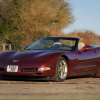
C5 Corvette Technical Research
The numbers behind the C5: production figures and build dates for all eight years, VIN decoding, every RPO and factory option with its price and take rate, the color charts, specifications and performance, sales brochures, owners manuals, technical service bulletins, recalls, common problems, maintenance schedules and our DIY guides. The year pages carry each model year’s own set.

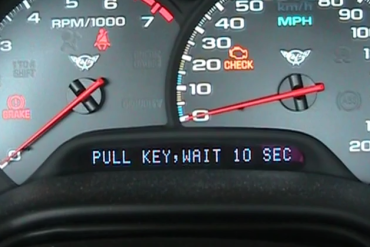
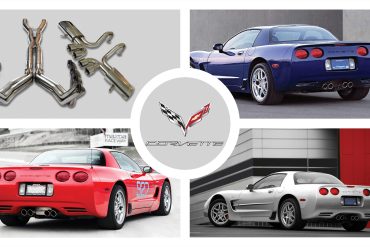


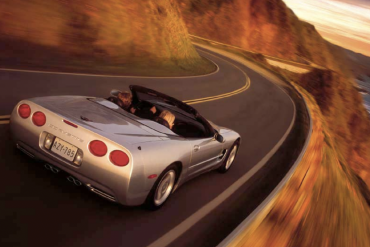




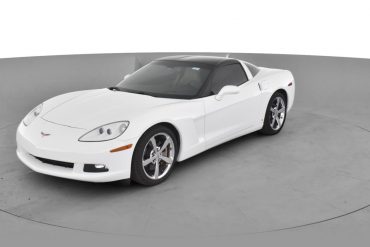
C5 Corvette Pictures, Videos, Wallpapers & Galleries
The C5 from every angle: galleries for each year, wallpapers, the C5s we have featured as Corvette of the Day, and videos of Z06s, C5-Rs, Pace Cars, Callaways and barn finds on the road, at auction and on track.
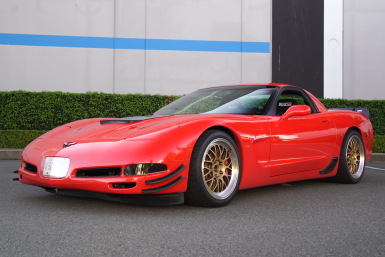
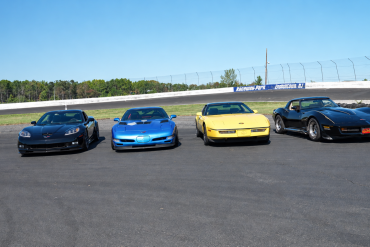
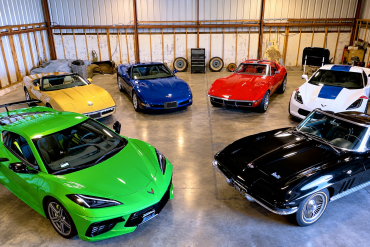


Everything We've Published On The C5 Corvette
Every story tagged C5 Corvette, newest first: cars for sale and auction results, Z06s, Corvette Racing, DIY and mod guides, videos, galleries and history. The latest headlines here.


FAQs
What years are the C5 Corvette?
The C5 Corvette was built for eight model years, 1997 through 2004. The 1997 was a coupe only; the convertible arrived in 1998, the fixed-roof hardtop in 1999 and 2000, and the Z06, on the hardtop body, from 2001 to 2004. The C4 preceded it, ending with the 1996, and the C6, a development of the same architecture, replaced it for 2005.
How many C5 Corvettes were built?
248,715: 9,752 in 1997, 31,084 in 1998, 33,270 in 1999, 33,682 in 2000, 35,627 in 2001, 35,767 in 2002, 35,469 in 2003 and 34,064 in 2004. That is 124,596 coupes, 89,610 convertibles, 6,121 hardtops (1999–2000) and 28,388 Z06s (5,773, 8,297, 8,635 and 5,683). The special editions were 1,163 1998 Pace Car replicas, 11,632 50th Anniversary Editions and 6,899 Commemorative Editions, 2,025 of them Z06s.
Who designed the C5 Corvette?
John Cafaro led the exterior design, chosen in a 1992 competition inside GM Design under Jerry Palmer and design vice-president Wayne Cherry, with Jon Albert on the interior. Dave Hill, who came from Cadillac to succeed Dave McLellan as Corvette chief engineer in November 1992, led the engineering with program manager Russ McLean, and Chevrolet general manager Jim Perkins kept the program alive through GM’s 1991–93 crisis. The LS1 came from GM Powertrain’s Gen III small-block program; the C5-R was built by Pratt & Miller for Corvette Racing under Doug Fehan.
What engines did the C5 Corvette have?
Two. The LS1, a 5.7-liter all-aluminum Gen III small block, made 345 horsepower and 350 lb-ft from 1997 to 2000 and 350 horsepower from 2001, in every coupe, convertible and hardtop. The LS6, the Z06’s engine, made 385 horsepower and 385 lb-ft in 2001 and 405 horsepower and 400 lb-ft from 2002 to 2004. Both drove a rear transaxle, a Borg-Warner T56 six-speed (close-ratio M12 in the Z06) or a 4L60-E four-speed automatic. The C5-R raced with 6.0- and 7.0-liter Katech engines, and Callaway’s C12 used a 440-horsepower SuperNatural LS1.
What changed from the C4 to the C5 Corvette?
Everything. The C5 replaced the C4’s uniframe with hydroformed frame rails and a backbone tunnel four and a half times stiffer, moved the transmission to the rear axle as a transaxle for a near 50/50 balance, used balsa-cored composite floors, stretched the wheelbase from 96.2 to 104.5 inches while keeping the length, replaced the LT1 and LT4 with the all-aluminum LS1, dropped the spare for run-flat tires, gave the convertible a trunk, cut drag to 0.29 and added a cabin with real room. The Z06 then did for the C5 what the ZR-1 had done for the C4, at a third of the price premium.
What is a C5 Z06?
The Z06 (2001–2004) was the C5’s performance model, built on the fixed-roof hardtop body that had been sold on its own in 1999–2000. It had the LS6 engine, 385 horsepower in 2001 and 405 from 2002, a close-ratio M12 six-speed only, FE4 suspension, 17 x 9.5 and 18 x 10.5-inch wheels with Goodyear Eagle F1 Supercar tires, a titanium exhaust, functional brake ducts and a mesh grille, at 3,118 pounds. It cost $47,500 in 2001 and $52,385 in 2004 and ran 0–60 in 3.9 seconds. Chevrolet built 28,388, including 2,025 2004 Commemorative Editions with a carbon-fiber hood. The name came from Duntov’s 1963 racing option and has been on every Corvette generation since.
Which C5 Corvette year is the best to buy?
For performance, a 2002–04 Z06: 405 horsepower, the stronger valvetrain, and the 2004’s retuned damping. For a driver, a 2001–04 coupe or convertible with the six-speed: 350 horsepower, Active Handling standard, the later interior and the fewest first-year faults, with the 2003–04 cars adding magnetic ride as an option and the Commemorative colors. For the least money, a 1998–2000 coupe, which is the cheapest Corvette that will keep up with modern traffic. The 1997 is the rarest C5 but not the most valuable; the 1998 Pace Car, the 2003 50th Anniversary and the 2004 Commemorative Z06 are the ones that have appreciated.
How much is a C5 Corvette worth today?
In the twelve months to October 2026, Classic.com tracked standard C5 coupes and convertibles selling for $8,100 to $31,900, most between $13,400 and $25,000; 1999–2000 hardtops for $21,000 to $24,750; 1998 Pace Car replicas for $18,000 to $41,000; 50th Anniversary cars for $11,550 to $46,200 (benchmark about $26,400); Z06s for $16,300 to $55,000, most between $21,000 and $36,500 (benchmark about $28,500); and 2004 Commemorative Z06s for $23,583 to $40,000 (benchmark about $34,800). Mileage and the six-speed set the price within each group; check whether a result includes the buyer’s premium.
What were the C5 Corvette special models?
Factory: the 1998 Indianapolis 500 Pace Car replica (1,163), the 1999–2000 hardtop (6,121), the 2001–04 Z06 (28,388), the 2003 50th Anniversary Edition (11,632) and the 2004 Commemorative Edition (6,899, 2,025 of them Z06s); the 2002 and 2004 Indy pace cars and the 1999 Daytona and Le Mans pace cars were not replicated. Tuner: the Callaway C12, the Lingenfelter 427 and twin-turbo cars, the Mallett Hammer Z06, the Guldstrand 50th Anniversary Signature Edition, the Specter Werkes GTR and the Greenwood G5R. Racing: the Corvette C5-R. Concepts: the 2001 Tiger Shark, the 2002 White Shark and the 2003 Italdesign Moray.
How did the C5 Corvette do in racing?
It made Corvette Racing. The Pratt & Miller C5-R debuted at Daytona in 1999, won its first race at Texas in 2000, won the 24 Hours of Daytona outright in 2001, won the GTS class at Le Mans in 2001, 2002 and 2004 and at Sebring in 2002, and took the American Le Mans Series GTS championship four years running, 2001 to 2004, before the C6.R replaced it. Eleven chassis were built. The 2004 Commemorative Edition was built to mark the Le Mans wins, and the production C5 paced the Indianapolis 500 in 1998, 2002 and 2004.
What are the common problems with a C5 Corvette?
The electronic column lock, which can lock the steering with the engine running and was recalled (a bypass is the usual fix); the Electronic Brake Control Module on 1997–2000 cars; the LS1 harmonic balancer working loose; fuel-level sensors fouled by ethanol; stripped headlight-motor gears; cracked hatch-glass and roof-panel seals and squeaks; the 1997–99 proximity key; collapsing seat foam; and on 2003–04 cars expensive magnetic-ride dampers. The LS engines and T56 are robust, parts are cheap and the C5 forums have a fix for everything, which is why mileage and condition set the price more than the year.
Is a C5 Corvette a good investment?
The Z06, the 1998 Pace Car, the 50th Anniversary and the Commemorative Editions have appreciated since about 2020, the first modern Corvettes to do so, and the lowest-mileage Z06s now bring $40,000 to $55,000 against a $47,500–$52,385 sticker. The ordinary C5, with 220,000 built, is a driver’s car whose price tracks mileage and condition, and the 1998–2000 coupes have been the cheapest Corvettes on the market for years. A low-mileage Z06 or edition car bought with its paperwork has held value; an ordinary C5 is bought to be driven. We are not financial advisers; dated Classic.com results and the car’s build sheet and window sticker are the places to check before paying.
All The Research
C5 Corvette Advertisements / C5 Corvette Build Dates / C5 Corvette Buyer’s Guide / C5 Corvette Colors / C5 Corvette Common Issues / C5 Corvette DIY / C5 Corvette Engine / C5 Corvette Engines (All) / C5 Corvette Factory Options / C5 Corvette Maintenance / C5 Corvette Mods / C5 Corvette Owners Manual / C5 Corvette Performance / C5 Corvette Posters / C5 Corvette Pricing / C5 Corvette Production / C5 Corvette Production Figures / C5 Corvette Recalls / C5 Corvette RPO Codes / C5 Corvette Sales Brochures / C5 Corvette Service Bulletins / C5 Corvette Specifications / C5 Corvette VIN Numbers
